Uncategorized
-
Challenging the argument that we’re not designed to address climate change
In the face of a slow and inadequate global response to anthropogenic climate change, scholars and journalists frequently claim that human psychology is not designed or evolved to solve the problem, and they highlight a range of “psychological barriers” to climate action. Here, we critically examine this claim and the evidence on which it is…
-
The meat industry is doing exactly what Big Oil does to fight climate action
My Op-Ed in the Washington Post. Some climate scientists and activists fear that food issues might distract from efforts to curb fossil fuel use; certainly, meat and dairy companies would prefer to keep the spotlight on energy and transportation. But even if we stopped using fossil fuels entirely, the current emissions from the global food…
-
Animal welfare risks of global aquaculture
The unprecedented growth of aquaculture involves well-documented environmental and public-health costs, but less is understood about global animal welfare risks. Integrating data from multiple sources, we estimated the taxonomic diversity of farmed aquatic animals, the number of individuals killed annually, and the species-specific welfare knowledge (absence of which indicates extreme risk). In 2018, FAO reported…
-
The US Response to COVID-19 and Climate Change Endangers the Country and the World
Dale Jamieson and I co-wrote a commentary for One Earth on similarities between the U.S. positions on COVID-19 and climate change. The US does not need to lead the world, but it does need to act as a good citizen. This requires at a minimum re-engaging with the Paris Agreement and supporting the WHO. Whereas…
-
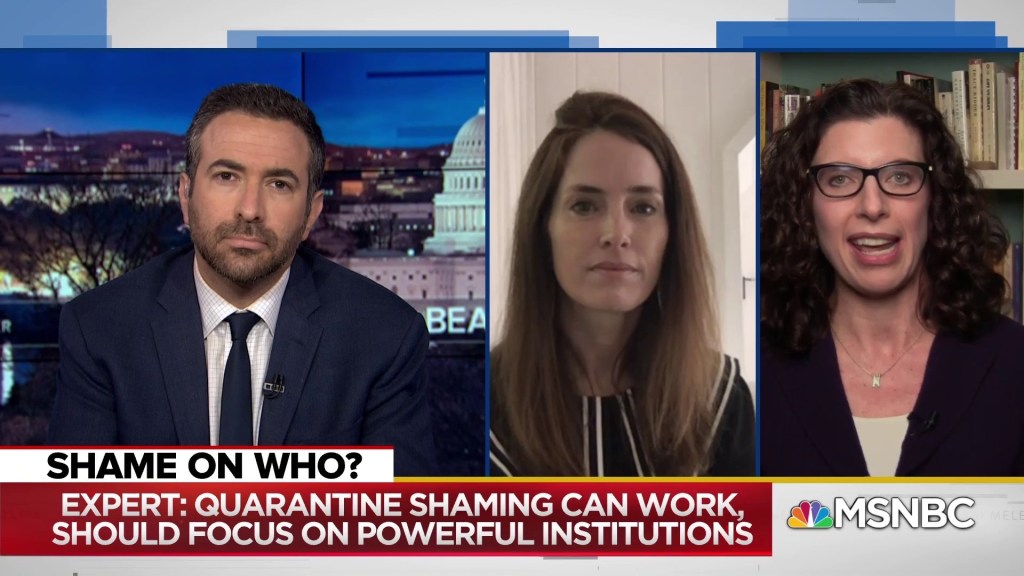
Covid-19: Public shaming has only just begun
Read my article on coronavirus shaming 1.0, 2.0, and what’s next at Gen. Also, a 2020 moment on Ari Melber’s The Beat talking about shaming and Florida’s Grim Reaper.
-
An evaluation of Regional Fisheries Management Organization at-sea compliance monitoring and observer programs
Abstract Independent onboard monitoring of fishing activities is important in an era of marine animal overexploitation and declining fish populations. Fisheries observers have traditionally filled this role to varying capacities. Their work is critical to fisheries managers because observers collect data on, for example, catch composition, discard and by-catch policy compliance, and transshipment activities –…
-
Watch over Antarctic waters
Commentary led by Cassandra Brooks, and also David Ainley, Peter Abrams, Paul Dayton, Robert Hofman, and Donald Siniff at Nature. In a rapidly changing climate, fisheries in the Southern Ocean must be managed cautiously… Read it here.
-
Asad Raza’s Weekend Guests: Jennifer Jacquet
As part of Root sequence. Mother tongue (2017), Asad Raza’s show at the Whitney Museum of American Art, he invited series of guests to occupy the installation with choreographic, musical, and intellectual events for weekend visitors to the museum. Comprising mentors, friends, and younger creative practitioners, the group is a plurivocal portrait of the artist’s…
-

Intergenerational apology
Sarah Schlesinger and Jennifer Jacquet teamed up for this project on an intergenerational apology. Sarah’s work was part of the Shanghai Project curated by Dr. Yongwoo Lee and Hans Ulrich Obrist. The catalogue essay is below. SORRY 2116 Jennifer Jacquet Where to begin when apologizing to the future? The legacy of slavery, colonialization, and the…
-
Wildlife Crime Tech Challenge Grand Prize Winner
Jennifer Jacquet and Sunandan Chakraborty’s project at NYU was selected as one of 4 Grand Prize Winnersin the Wildlife Crime Tech Challenge, a USAID initiative that is being implemented in partnership with the National Geographic Society, the Smithsonian Institution, and TRAFFIC.
-
Soft but significant power in the Paris Agreement
Article with Dale Jamieson on the potential for shame to put downward pressure on emissions in Nature Climate Change. It becomes more difficult not to fulfill one’s commitments if others are fulfilling theirs, and easier to avoid one’s commitments if others are avoiding theirs. Read it here.
-
The Anthropocebo Effect
The anthropocebo effect: a psychological condition that exacerbates human-induced damage — a certain pessimism about humanity that leads us to accept humans as a geologic force and destruction as inevitable. Jacquet, J. (2013) The Anthropocebo Effect. Conservation Biology 27:898-899. Response to the Edge.org annual question.
-

Intra- and intergenerational discounting in the climate game
The difficulty of avoiding dangerous climate change arises from a tension between group and self-interest and is exacerbated by climate change’s intergenerational nature4. The present generation bears the costs of cooperation, whereas future generations accrue the benefits if present cooperation succeeds, or suffer if present cooperation fails. Although temporal discounting has long been known to…
-
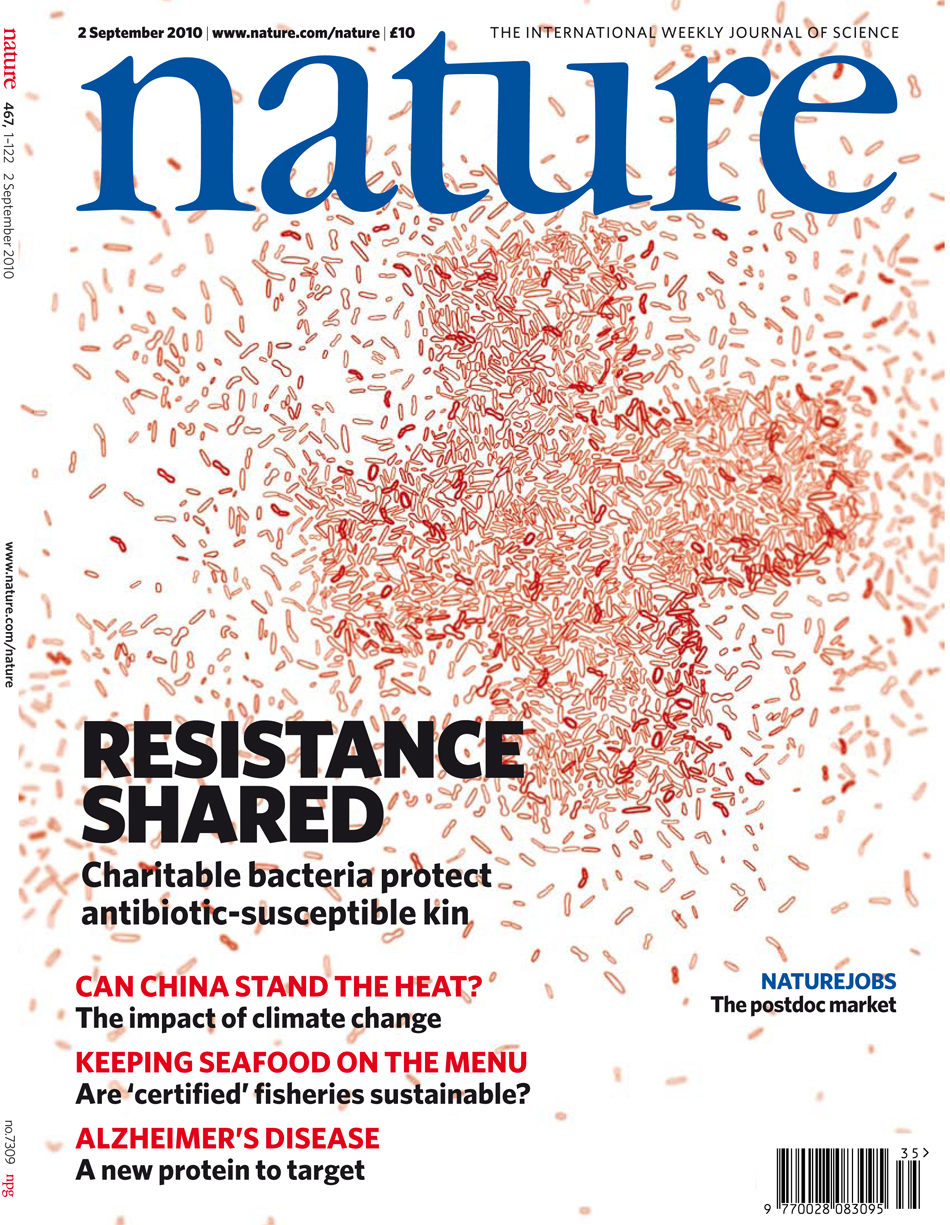
Seafood stewardship in crisis
A growing number of consumers want to eat seafood without feeling guilty. Enter the Marine Stewardship Council (MSC), which purports to certify sustainable fisheries and provides a label for sustainable products to “promote the best environmental choice in seafood”. The MSC is growing rap- idly; the organization is also rapidly failing on its promise. Jacquet,…

 Jennifer Jacquet