JJ
-

We are not *NOT* evolved to respond to climate change
Article for the Mind & Morality series at the Center for Humans and Nature. We are not built to solve climate change, but we were also not not built to solve it. Read more here.
-
Through the Wormhole
Research featured on Through the Wormhole’s Season 5 episode “Is Poverty Genetic?”. A clip from the entire episode is here:
-
The Anthropocebo Effect
The anthropocebo effect: a psychological condition that exacerbates human-induced damage — a certain pessimism about humanity that leads us to accept humans as a geologic force and destruction as inevitable. Jacquet, J. (2013) The Anthropocebo Effect. Conservation Biology 27:898-899. Response to the Edge.org annual question.
-

CNN’s Fareed Zakaria
Work on intergenerational discounting and climate change featured on Fareed Zakaria’s Global Public Square on CNN.
-

Intra- and intergenerational discounting in the climate game
The difficulty of avoiding dangerous climate change arises from a tension between group and self-interest and is exacerbated by climate change’s intergenerational nature4. The present generation bears the costs of cooperation, whereas future generations accrue the benefits if present cooperation succeeds, or suffer if present cooperation fails. Although temporal discounting has long been known to…
-

The role of gender in scholarly authorship
Gender disparities appear to be decreasing in academia according to a number of metrics, such as grant funding, hiring, acceptance at scholarly journals, and productivity, and it might be tempting to think that gender inequity will soon be a problem of the past. However, a large-scale analysis based on over eight million papers across the…
-

A review of formal objections to Marine Stewardship Council fisheries certifications
The Marine Stewardship Council (MSC) was created as a conservation tool – intended to provide “the best environmental choice in seafood” to consumers and to create positive incentives that would improve the status and management of fisheries. During its 15 years, the MSC, which has an annual budget of close to US$20 million, has attached…
-

Asymmetrical contributions to the tragedy of the commons
In Garrett Hardin’s popular essay on “The Tragedy of the Commons”, he presents a model of a shared commons where herdsmen graze their cattle to illustrate the tension between group and self-interest that characterizes so many social dilemmas. However, Hardin is not explicit that consumption can actually vary widely among herdsman, although later, when discussing…
-

AnOther w/Brian Eno
“Here, [Brian] Eno and Jacquet share an emailed conversation about their collaboration.”
-

Trends, current understanding and future research priorities for artisanal coral reef fisheries research
Artisanal coral reef fisheries provide food and employment to hundreds of millions of people in developing countries, making their sustainability a high priority. However, many of these fisheries are degraded and not yielding their maximum socioeconomic returns. We present a literature review that evaluates foci and trends in research effort on coral reef fisheries. We…
-
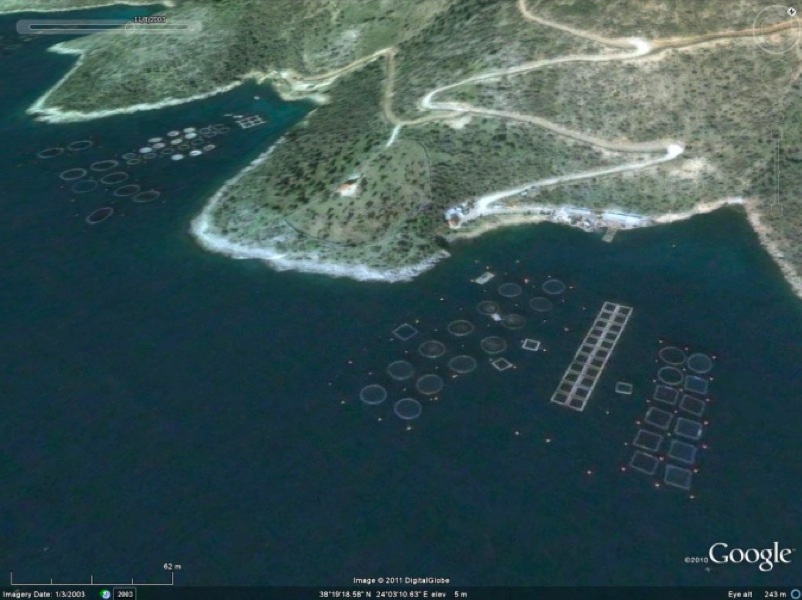
Fish farms at sea: the ground truth from Google Earth
In the face of global overfishing of wild-caught seafood, ocean fish farming has augmented the supply of fresh fish to western markets and become one of the fastest growing global industries. Accurate reporting of quantities of wild-caught fish has been problematic and we questioned whether similar discrepancies in data exist in statistics for farmed fish…
-

Shame and honor drive cooperation
Can the threat of being shamed or the prospect of being honoured lead to greater cooperation? We test this hypothesis with anonymous six-player public goods experiments, an experimental paradigm used to investigate problems related to overusing common resources. We instructed the players that the two individuals who were least generous after 10 rounds would be…
-
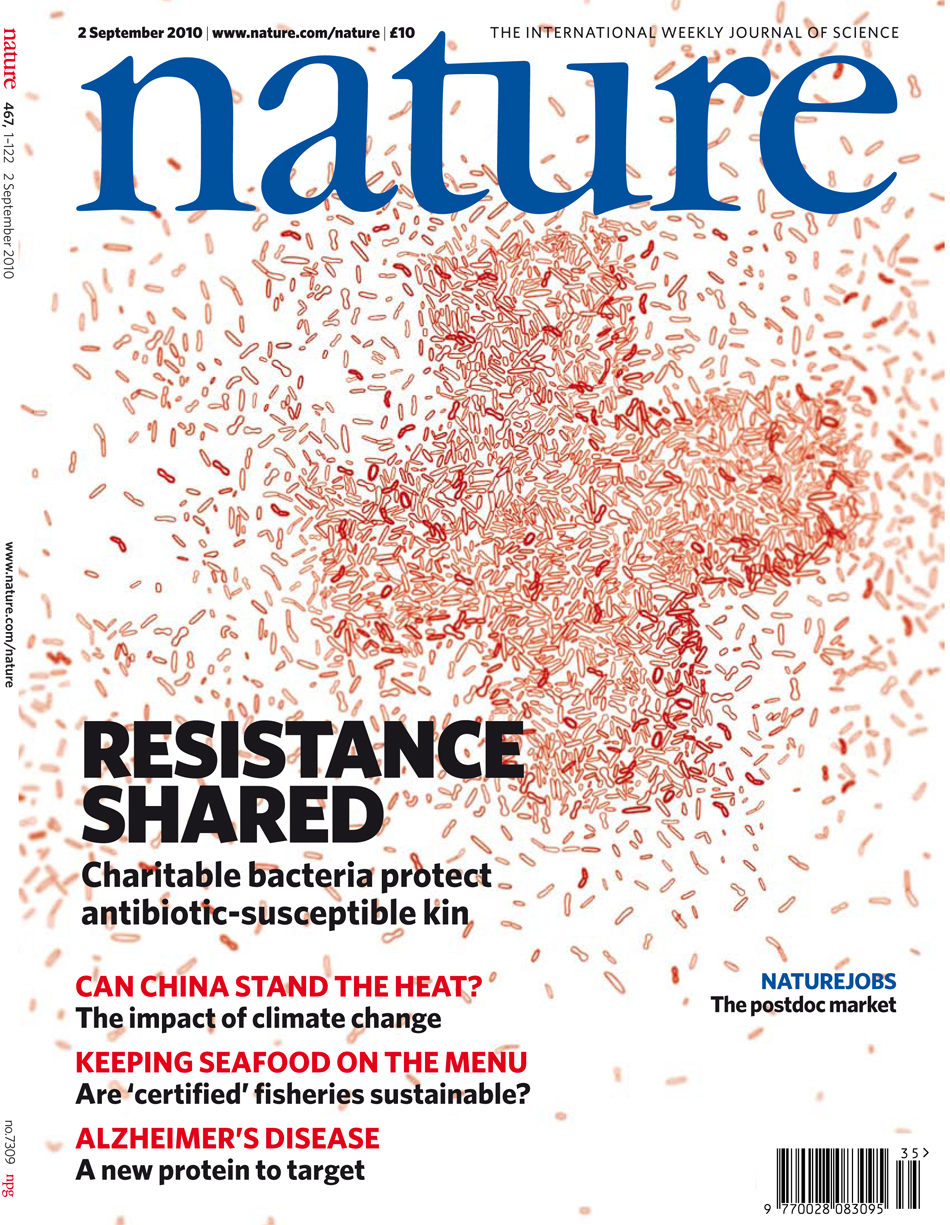
Seafood stewardship in crisis
A growing number of consumers want to eat seafood without feeling guilty. Enter the Marine Stewardship Council (MSC), which purports to certify sustainable fisheries and provides a label for sustainable products to “promote the best environmental choice in seafood”. The MSC is growing rap- idly; the organization is also rapidly failing on its promise. Jacquet,…
-

Scanning the oceans for solutions
The field of conservation science has been highly successful in identifying, diagnosing, and publicizing declines in biodiversity and many other problems affecting our environment. It has been less successful in focusing our attention on solutions. Here we recommend the formal process of what we call a solution scan: the systematic classification of known threats and…
-

Fishbook
Friends, heroes, frenemies, ex-girlfriends in bikinis: Facebook grants access to a lot of people. The limit of the social networking giant is that it includes only humans. As we become increasingly urbanized and isolated from wilderness, important interactions with other members of life’s fabric become more tenuous. We have two options: (1) we could develop…
-
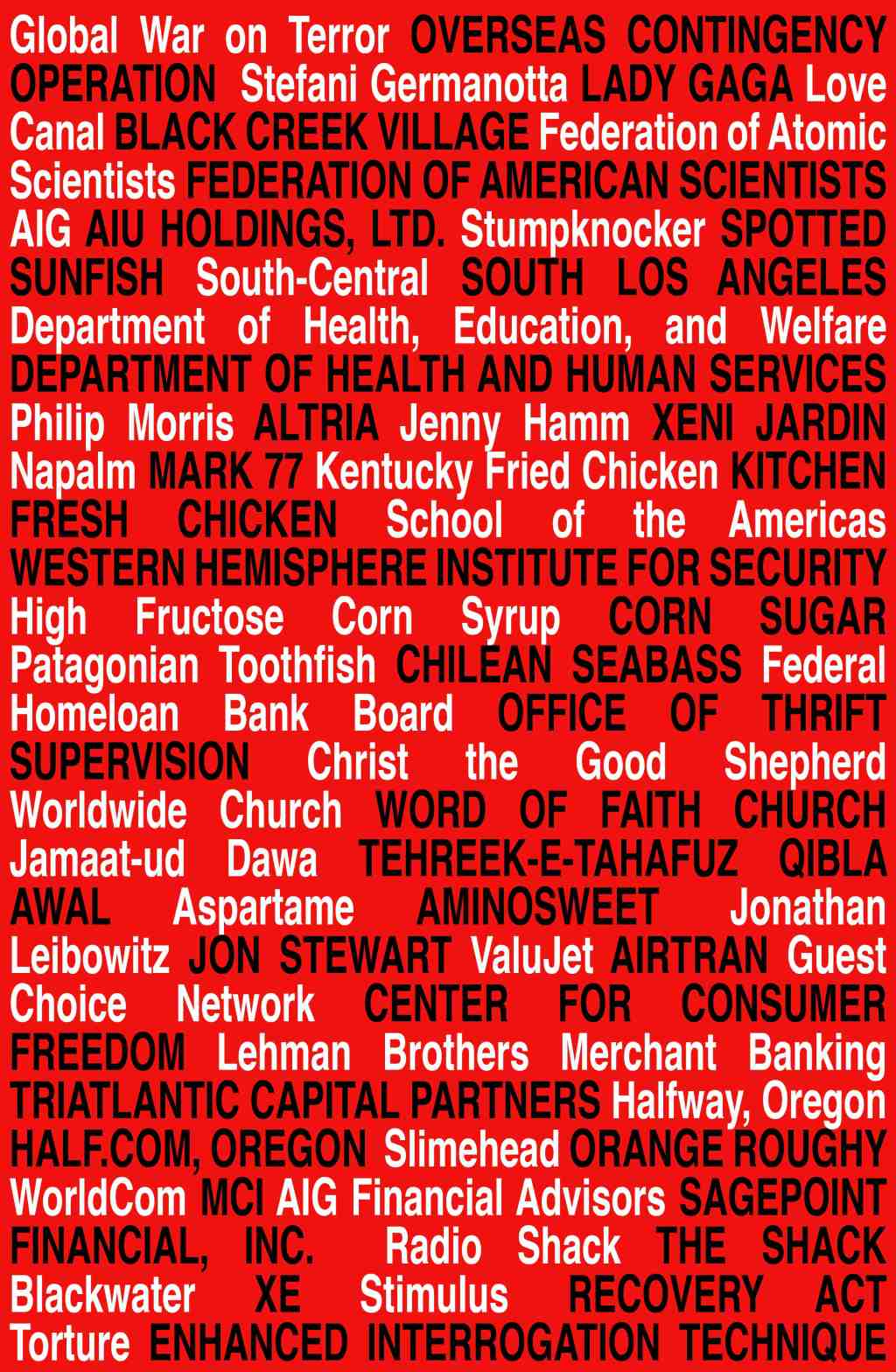
Deception/reputation management by name reconfiguration
Jean Jaurès apparently once said, “Quand les hommes ne peuvent changer les choses, ils changent les mots.” (When man can’t change things, he changes words.) By mapping old names to new ones, this piece hopes to capture the spirit of that quote as well as some of my research on shame and reputation. This image…
-

Few data but many fish: marine small scale fisheries catches for Mozambique and Tanzania
The fisheries data supplied to the Food and Agriculture Organization of the United Nations (FAO) by national agencies have served as the primary tool for many global and regional studies. However, it is recognised that these data are incomplete and often underestimate actual catches, particularly for small-scale fisheries. This study reconstructed total marine fisheries catches…
-

Conserving wild fish in a sea of market-based efforts
Over the past decade conservation groups have put considerable effort into educating consumers and changing patterns of household consumption. Many groups aiming to reduce overfishing and encourage sustainable fishing practices have turned to new market-based tools, including consumer awareness campaigns and seafood certification schemes (e.g. the Marine Stewardship Council) that have been well received by…
-

Jellyfish burger
Jellyfish burger by Dave Beck & Jennifer Jacquet. This image won honorable mention for illustration in the NSF’s 2010 visualization competition.
-

Counting fish: a typology for fisheries catch data
Good decisions ideally require good data. Here, we present a straightforward typology for the broad classification of fisheries catch data. At each stage in the reporting chain, from fisher to national/international agencies, fisheries catches can be: known and reported; known and underreported; unknown and overreported; or unknown and underreported. Here, we consider largely the data…
-
What can conservationists learn from investor behavior?
How do we encourage personal savings and investment? Answers to this question, revealed through new analyses in experimental economics, provide insight into how to encourage collective savings and investment in our future through ecological conservation. There are three lessons to be learned. Jacquet, J. (2009) What can conservationists learn from investor behavior? Conservation Biology 23(3):…
-
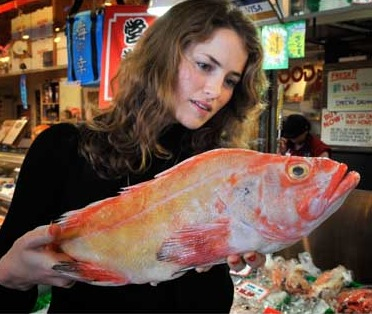
Silent water: a brief examination of the marine fisheries crisis
This paper is an attempt to synthesize and briefly examine the causes of the marine fisheries crisis, and to speculate about future initiatives. Ultimately, the human appetite is at the root of the marine fisheries crisis. But religion, technology, population pressure, science and our economic systems have provided vehicles for human appetite and thus contributed…
-

Trade secrets: renaming and mislabeling of seafood
As the global trade and market for seafood has grown, so have the twin problems of renaming and mislabeling. Resource scarcity, the potential for greater profits, and weak legislation have all encouraged incorrect labeling, the results of which include consumer losses, the subversion of eco-marketing, further degradation of fisheries resources, and even adverse effects on…
-

Funding priorities: big barriers to small-scale fisheries
Since the mid-1990s there has been a concerted effort to encourage fisheries sustainability by targeting large-scale, high-catch fisheries and by raising consumer awareness. Because of the often slow pace of regulatory approaches, this voluntary, market-oriented effort has been structured so as to avoid government involvement. But have small- scale fisheries, our best option for sustainable…
-

In hot soup: sharks captured in Ecuador’s waters
Sharks never stop growing and neither does the Asian demand for sharkfin soup. Ecuador is one nation of many that feeds the demand for fins, and fishers there catch more than 40 different shark species. But shark catches have been considerably underreported worldwide. Until the 2005 update of fisheries data, the United Nations Food and…
-

The rise of consumer awareness campaigns in an era of collapsing fisheries
The human appetite for seafood has intensified and so has overfishing and damage to marine ecosystems. Recently, the response to the fisheries crisis has included a considerable effort directed toward raising the seafood awareness of consumers in North America and Europe. The resulting campaigns aim to affect the seafood demand and to lead to a…



 Jennifer Jacquet